Until now THERA rooms were exercises. With this update five of them also measure: the patient does a simple task, the headset records degrees, times and errors, and the professional finds the numbers in the session dashboard. The same dashboard lines up the sessions of the same patient, so you can see how a measure changes over time.
All the rooms share one place: a pale platform on still water, a colonnade open to the sky, nothing nearby to pull attention away from the task. The professional starts them from the web app like any other room and picks the parameters, for example which arm, how many targets, how much time.
Neck range
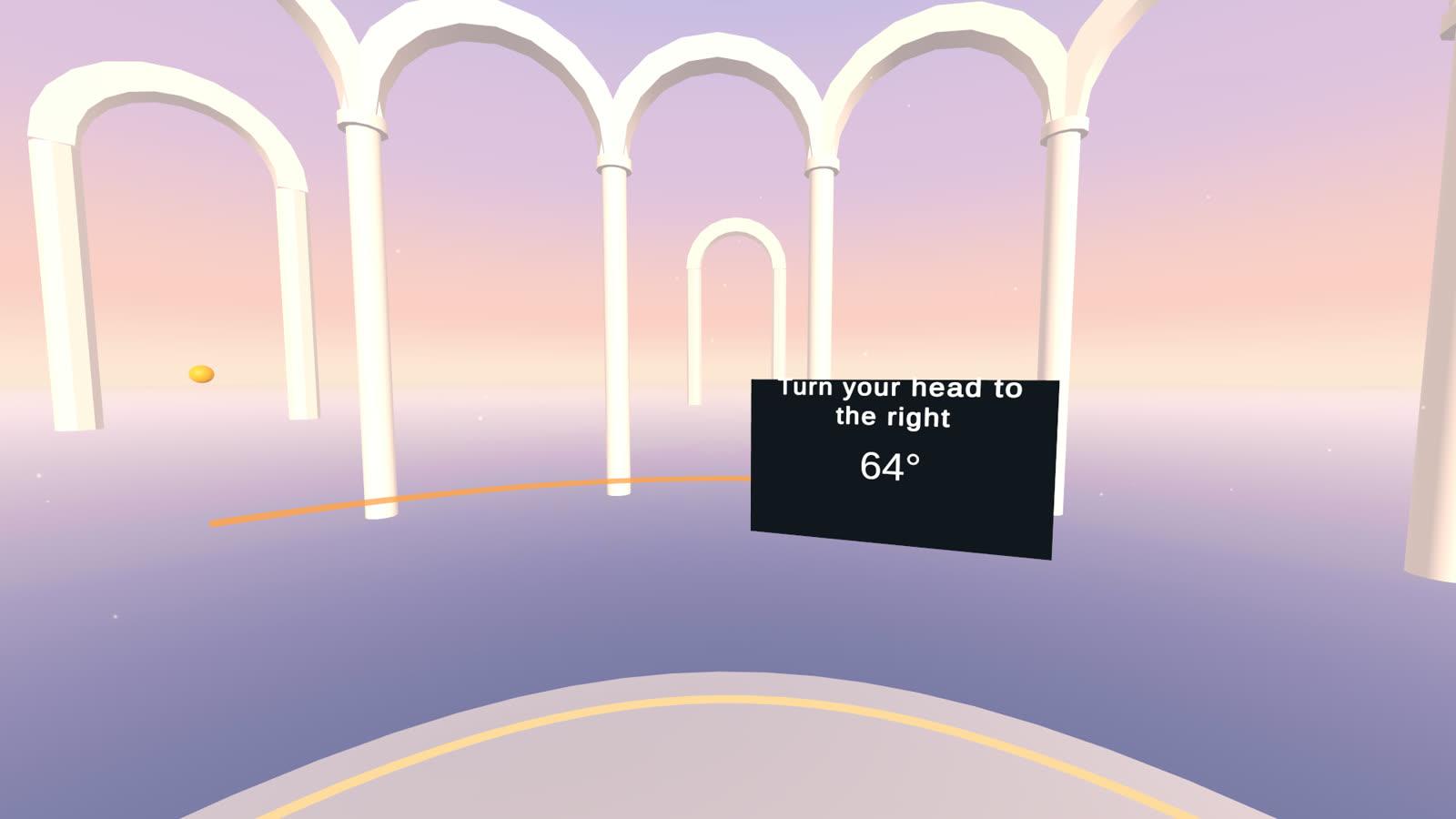
The patient looks at a point straight ahead to set the starting position, then turns, bends and tilts the head as far as they can. The headset measures rotation to the right and left, flexion, extension and side bending in degrees, and shows the value while the movement happens.
Arm reach
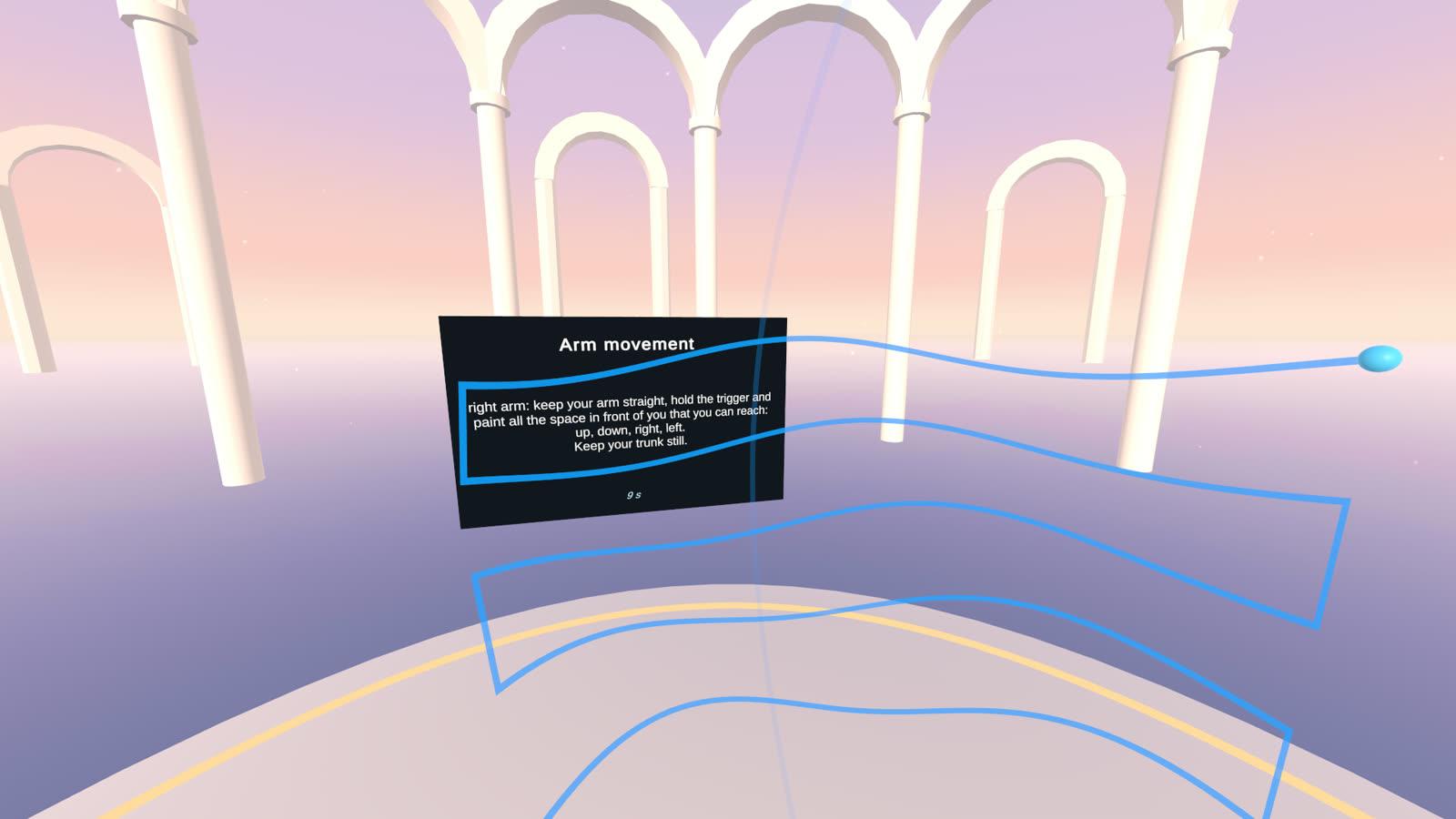
Controller in hand and arm straight, the patient raises the arm forward, out to the side and backwards, then paints all the space in front of them they can reach. The room records flexion, abduction and extension angles and the share of space reached, for each arm.
Block transfer
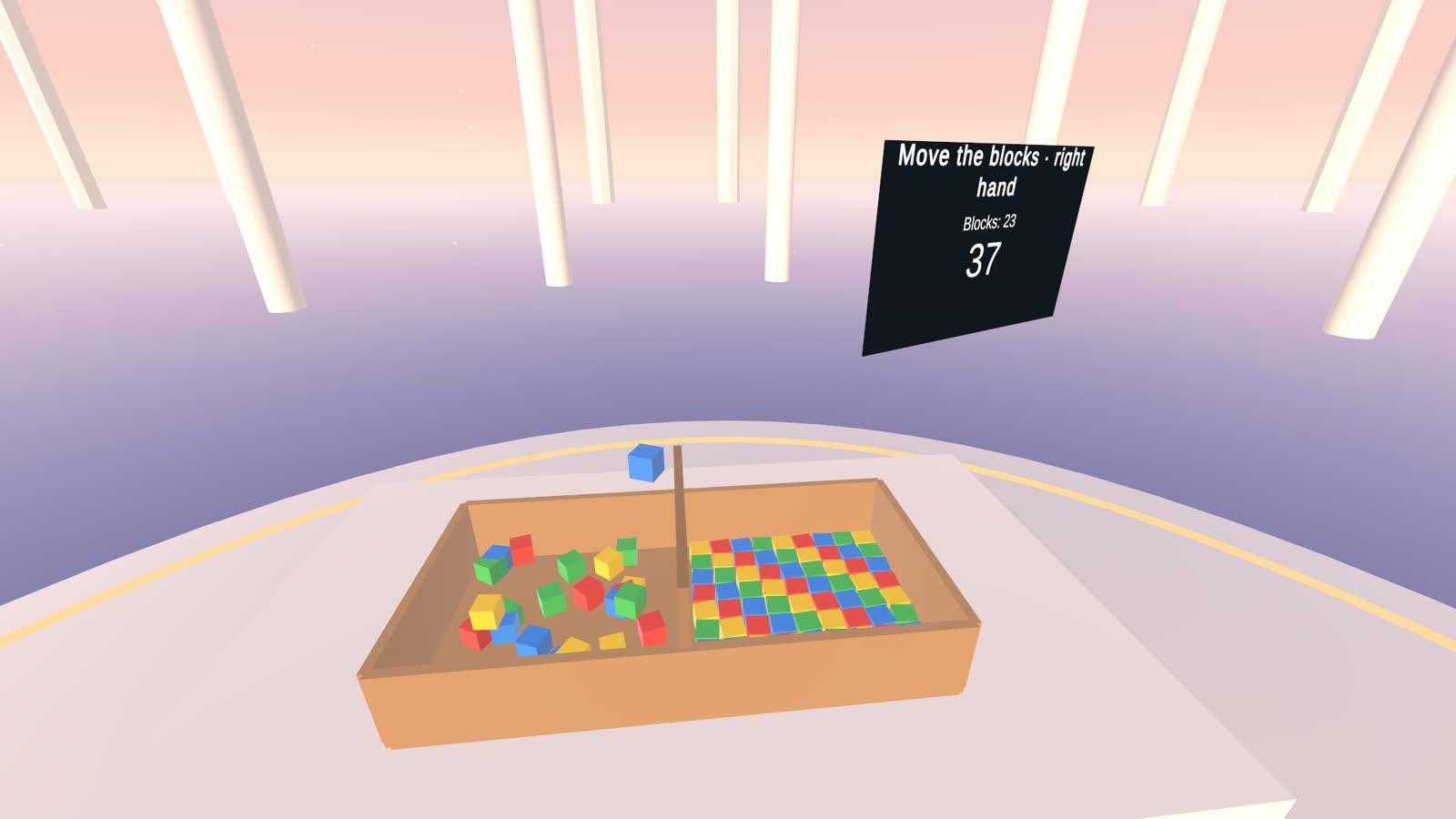
It is the VR version of the block task, with the measurements of the original box. With bare hands, no controllers, the patient moves as many blocks as possible over the divider in the set time, one hand at a time. Counting is automatic.
Find the diamonds
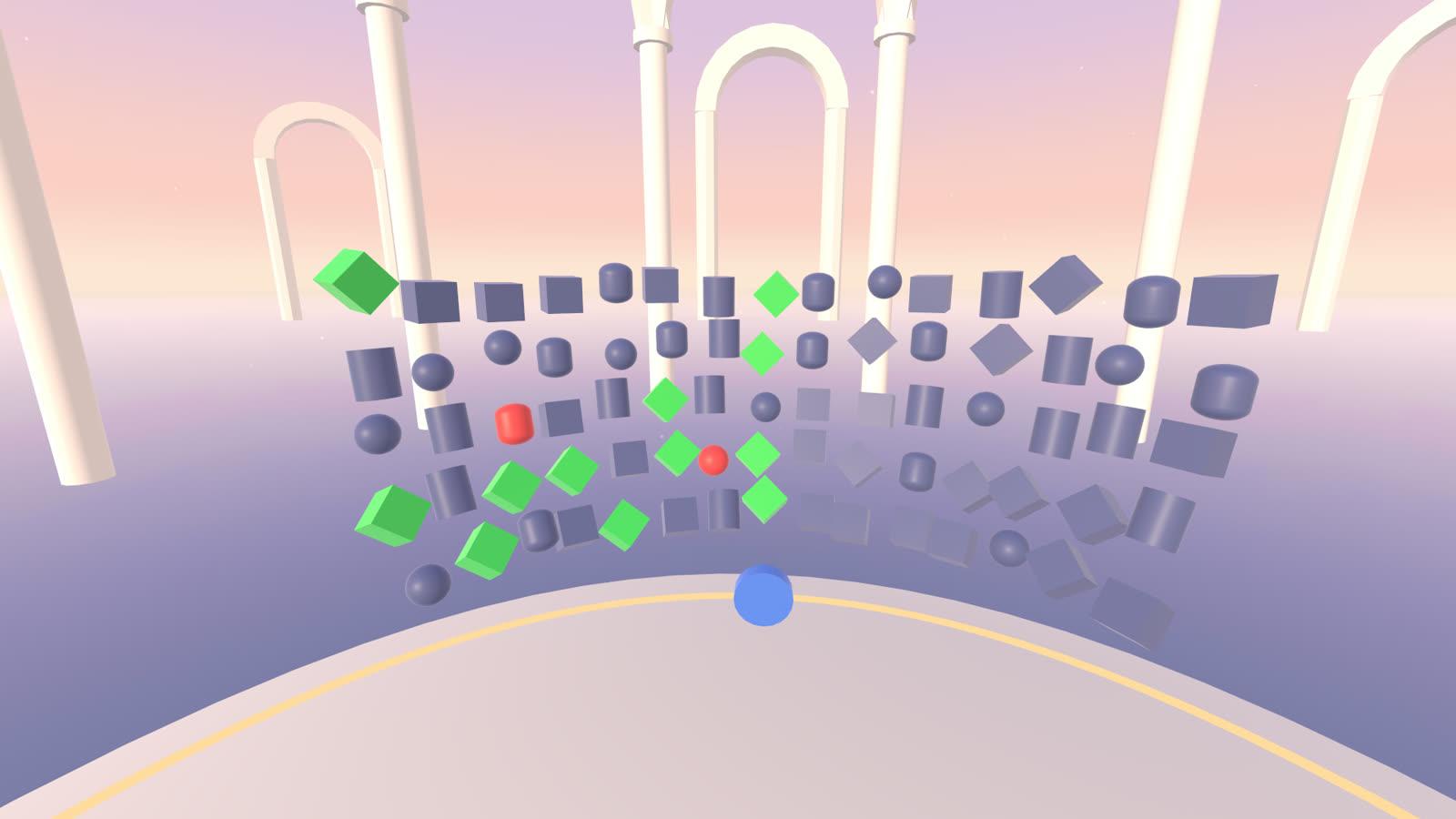
On an arc in front of the patient there are shapes, all the same color. The patient touches every diamond and nothing else. The room records diamonds found, those missed on the left and on the right, errors, time and the side where the search started. The layout changes at every trial, with the same number of diamonds per sector, or stays fixed if the professional wants to repeat the same one.
Sequence trail
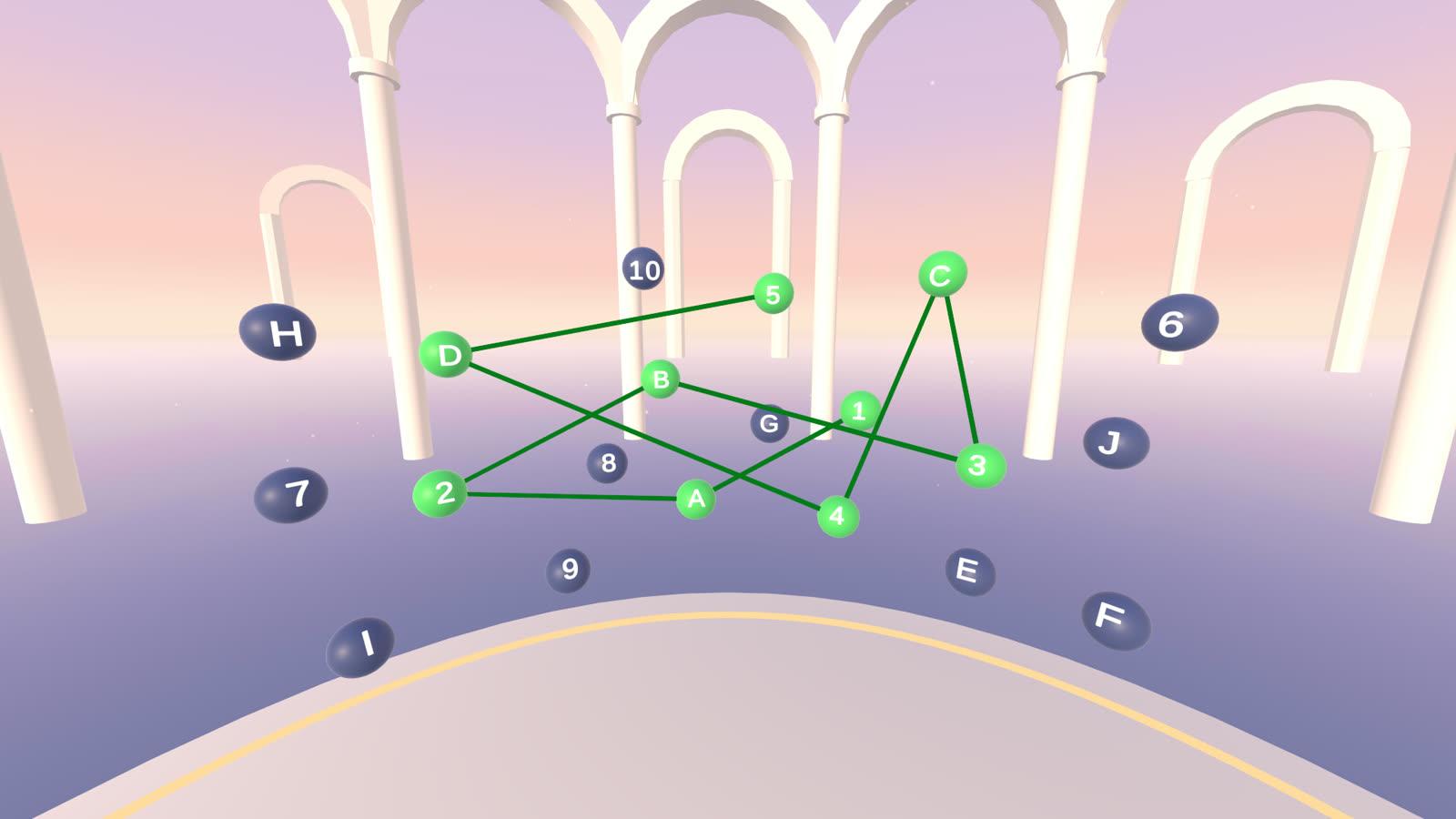
Numbered circles at arm's length, to be touched in order: first numbers only, then numbers and letters alternating, 1, A, 2, B. A wrong touch flashes red and counts as an error. The room records the time of both parts, the errors and the difference between the two.
What they are and what they are not
They are measures taken by the headset during a task guided by the professional. They are inspired by well-known tasks, but they are not validated tests and they do not replace a clinical assessment. The comparison that makes sense is between sessions of the same patient, run with the same parameters.
If you already use THERA, you will find them in the room list after updating the app on the headset. If you want to try them, write to us.
- thera
- virtual reality
- measurement